Table of Contents
- Full Mouth Dental Implants: The Fixed, Permanent Option
- What Are Full Mouth Dental Implants Made Of?
- Full Mouth Dental Implant Healing Process
- What to Expect, Appointment by Appointment
- Caring for Your New Teeth
- Snap-In Dentures: A Middle-Ground Option
- Traditional Dentures: Held in by Suction Alone
- What Is the Cost of Full Mouth Dental Implants?
- Making the Right Decision for Your Smile
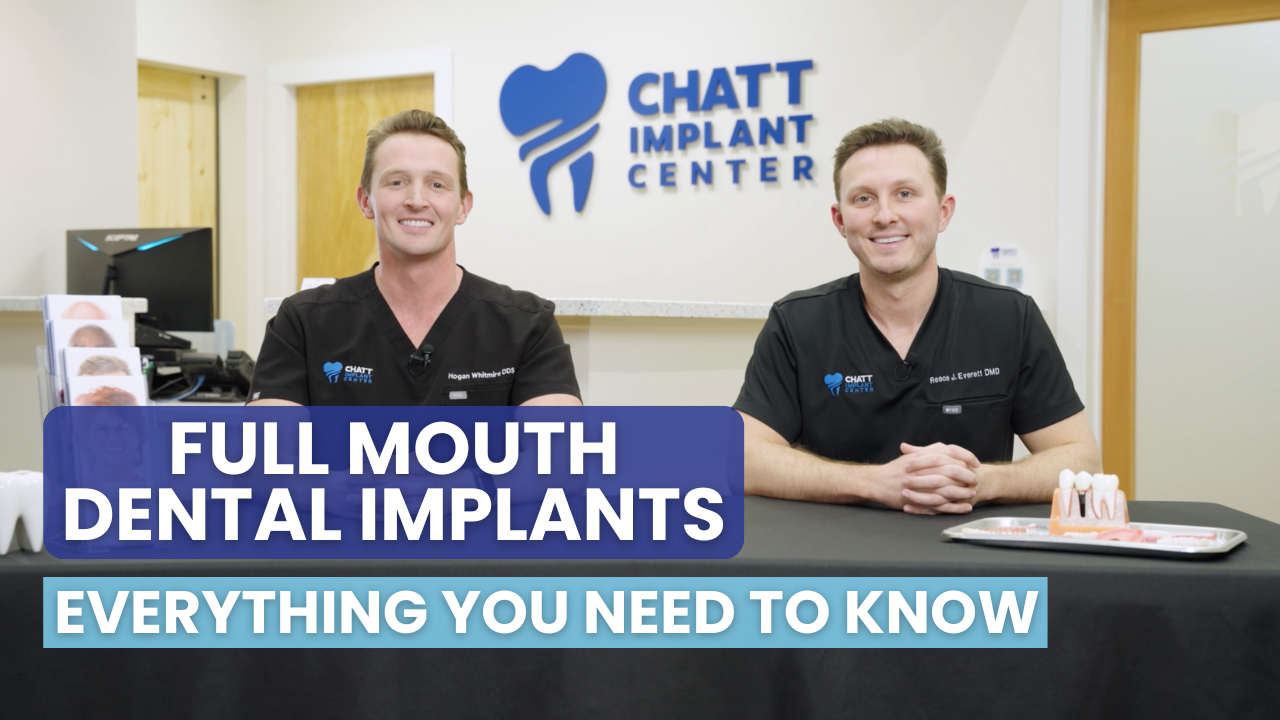
Whether you’ve been stuck in a denture for years, you’re dealing with missing teeth, or your teeth are loose and failing, it helps to understand all your options before making a decision. We’re Dr. Hogan Whitmire and Dr. Reece Everett at Chatt Implant Center, and we’re here to break down your options for full-mouth restorations, including full mouth dental implants, snap-in dentures, and traditional dentures, and who each option tends to work best for. That way, you can walk away with a better understanding of your choices and what’s right for you.
Full Mouth Dental Implants: The Fixed, Permanent Option
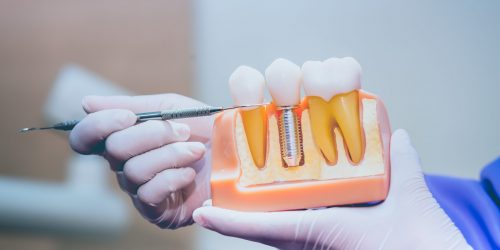
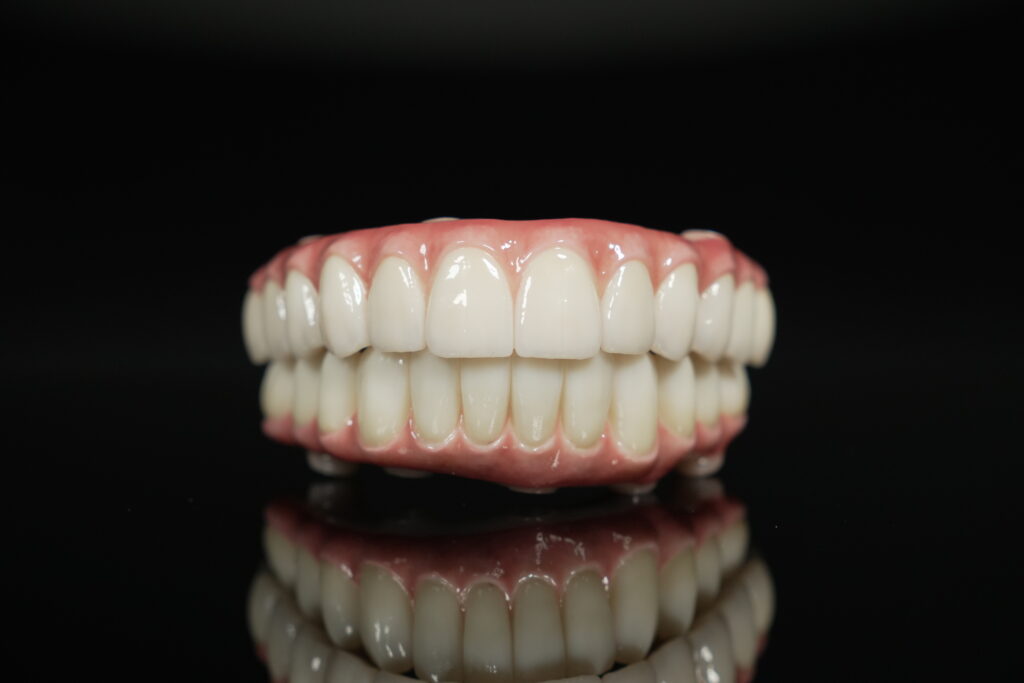
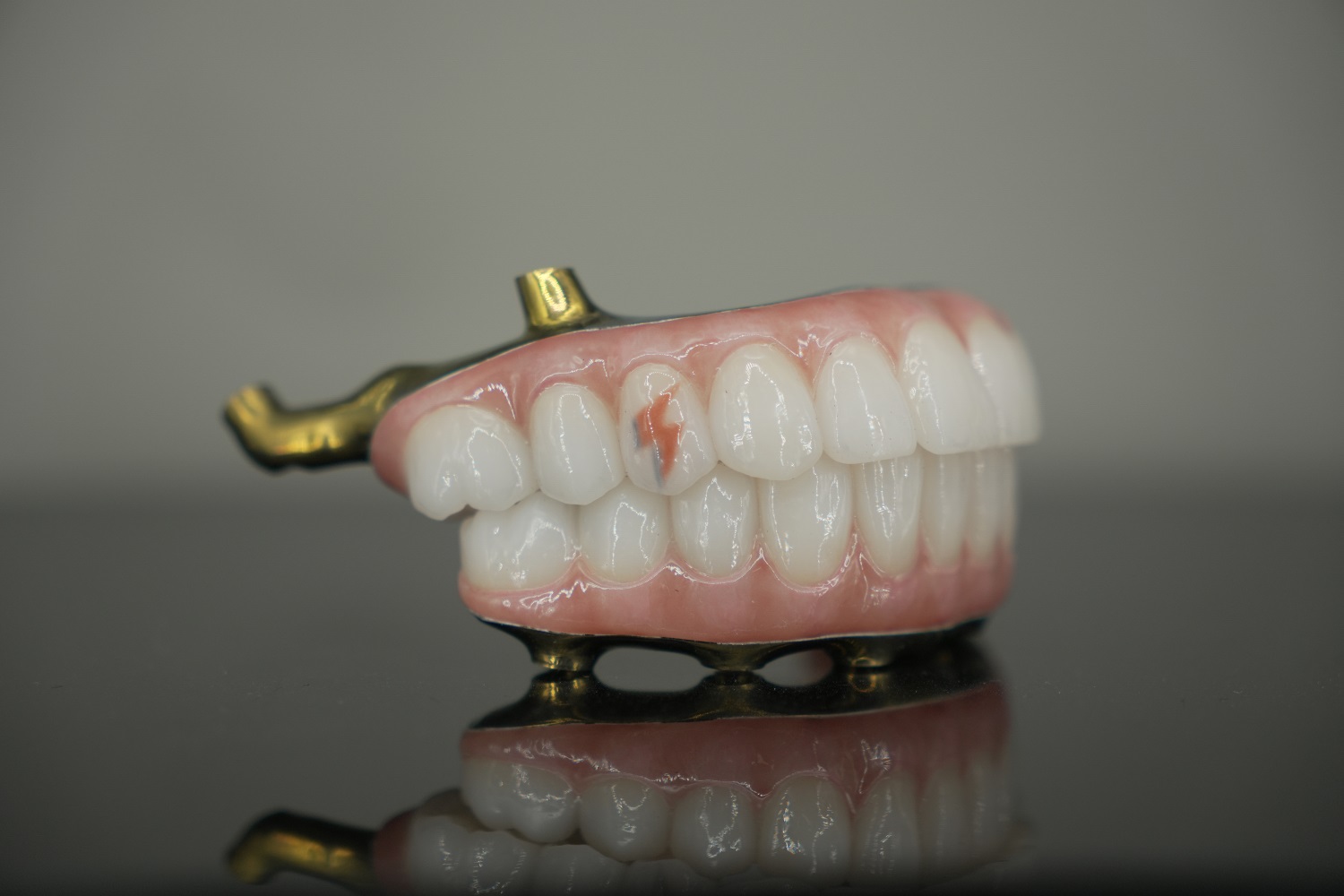
The restoration we place most often goes by a few different names, All-on-4, All-on-X, teeth in a day, but it’s all the same idea. It attaches directly to your implants and is screwed into place, so it doesn’t come out. A lot of patients ask if they need one implant per missing tooth, and the answer is no. Typically it’s four to six implants on top and bottom, essentially a full bridge secured to your implants.
A question we hear just as often is who is a candidate for this.

“Really it’s just about anyone. When you come in and see our office, we’re going to take X-rays, we’re going to take 3D scans, and we’re really going to evaluate your bone levels. There’s a lot of instances where patients come in and they’ve been told that they don’t have enough bone for dental implants, and more times than not, that’s just not true.” — Dr. Whitmire
Somewhere around 98 to 99% of the patients who walk through our door have enough bone for us to place implants. This is also just what we do, day in and day out. We both spent time in residency focused specifically on full arch implant placement, and we focus on implants every single day. We’re not trying to dip our toes into every other corner of dentistry, we’d rather be masters of one thing than a jack of all trades.
What Are Full Mouth Dental Implants Made Of?
We get this question constantly. Patients want to know if it’s durable, if it’ll last, and if it’s going to look like their natural teeth.
Historically, this restoration was made with a titanium bar and a denture style acrylic material glued on top, sometimes called a hybrid. That acrylic isn’t nearly as strong as what we use today.
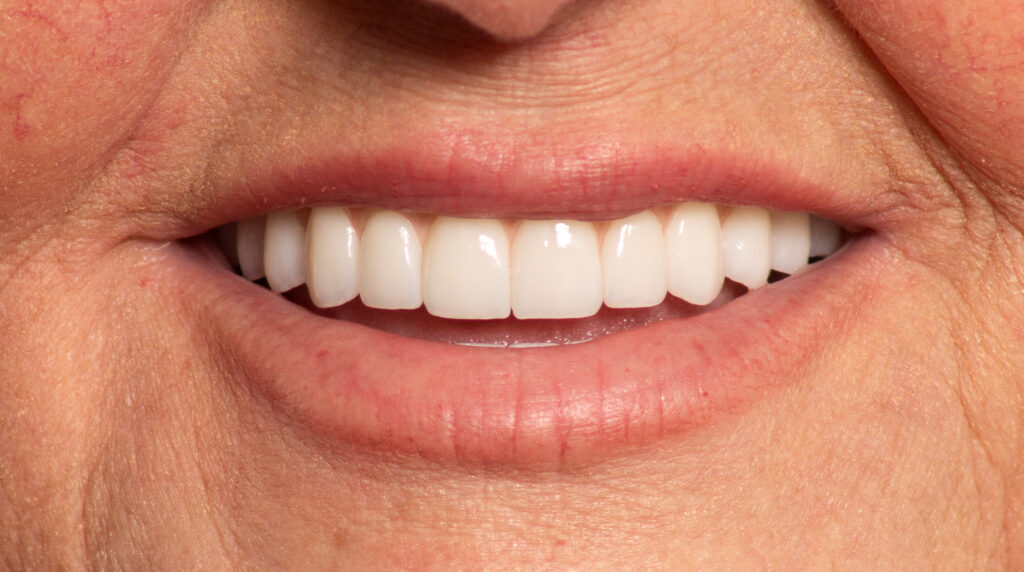
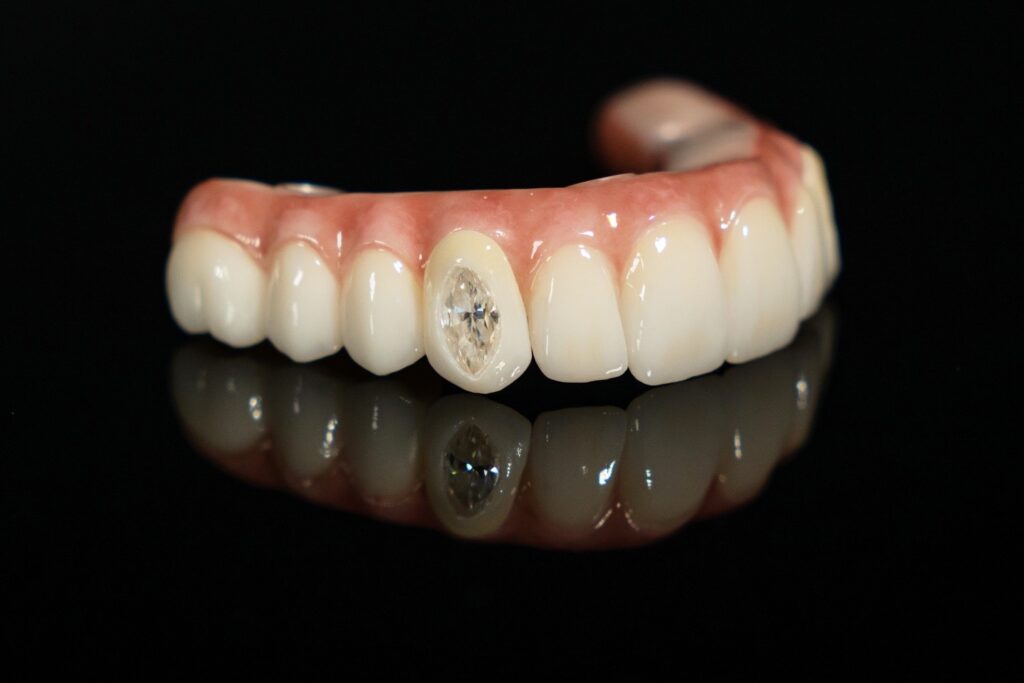
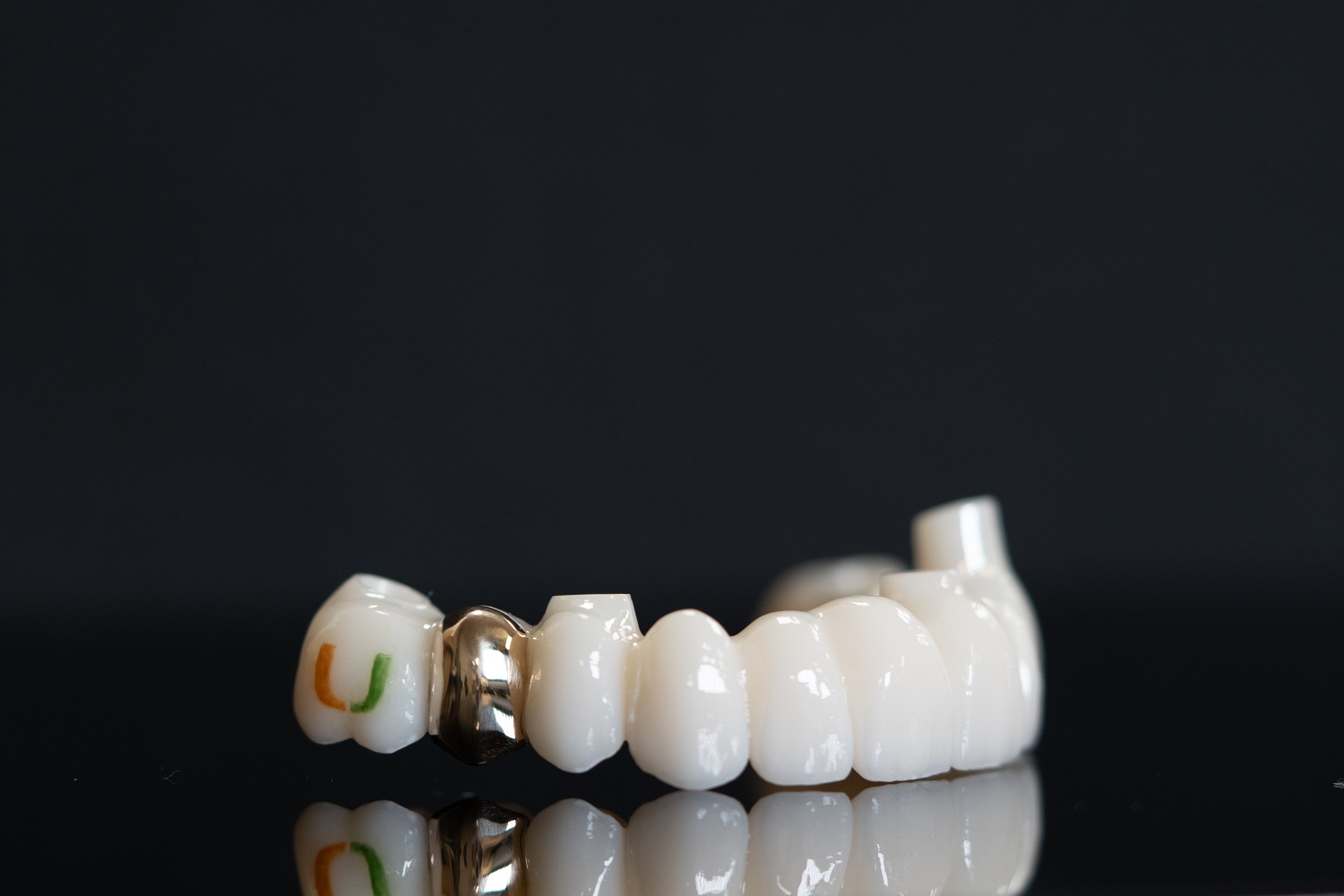
“Now we offer two options: a zirconia arch by itself, or a titanium bar with zirconia cemented on top of it. That titanium bar gives it a little bit more strength and reinforcement. And with that zirconia, I mean, it’s a ceramic, but it’s really a ceramic steel basically. It is incredibly strong and durable, and it’s really cosmetic and natural looking as well.” — Dr. Everett
Every restoration is also designed specifically for you. During your pre-op appointment, we take photos and intraoral scans and put them on the computer to virtually design your new smile before we ever get to surgery. If you have a photo of your own smile from years ago, or a smile you’ve seen and liked, bring it in, we’ll use it as a reference. From there, we work with you to choose the shape, size, and color of your new teeth, so what you end up with is customized specifically to you and not a cookie cutter smile.

Full Mouth Dental Implant Healing Process
After surgery, we place you into a temporary restoration rather than going straight to your final one, and there’s a good reason for that. We want to give your bone and gum tissue time to heal, and we need the implants to fuse to the bone, a process called osseointegration that usually takes about 90 days.
“There’s a lot of places out there that may market that they’re going to go straight to final, but in my opinion, I don’t necessarily think that’s a great idea because there’s so much change that can happen.” — Dr. Whitmire
As your swelling goes down and your implants integrate into the bone, your gum tissue goes through a lot of healing, and you can sometimes notice a small gap start to form underneath your temporary. That’s something we correct once we move you into your final restoration after healing, making sure we get good pressure against your healed gum tissue so you’re not packing food underneath it.
Since everything is healing, during the next 90 days, it’s also important to stick to a soft food diet. That doesn’t mean smoothies only, but the biggest thing we say is, if you can’t cut it up with a cheap plastic fork, don’t eat it for right now. That still leaves you a good pot roast or meatloaf, soft fish, eggs, mashed potatoes. You can really get creative. Bread tends to surprise people, since it feels soft, but we see breakages more often from patients biting into bread, subs, and sandwiches than almost anything else.
| Foods to Enjoy | Foods to Avoid |
|---|---|
| Pot roast | Bread, subs, and sandwiches |
| Meatloaf | Crusty or chewy bread |
| Soft pasta dishes | Raw carrots, apples, and other hard, crunchy produce |
| Mashed potatoes | Nuts and seeds |
| Soups and stews | Popcorn, chips |
| Scrambled eggs | Tough or chewy cuts of meat |
| Well cooked, soft vegetables | Ice or anything you’d normally bite into hard |
| Soft fish | Sticky candy or caramel |
What to Expect, Appointment by Appointment
Here, we’ll walk you through what happens at each appointment, so you’ll know exactly what to expect every step of the way. Plus, you’ll have the same team and familiar faces by your side throughout the entire process.
First, we get you in for a complimentary consultation appointment, where we take a typical panoramic X-ray as well as a 3D X-ray so we can really look into the dimensions of your bone. From there, we schedule your pre-op appointment, where we take photos and intraoral scans that allow our lab to start designing your new smile before surgery. Next comes your surgery day, where we remove any existing teeth and place your implants. You’ll get your temporary teeth within the next 24 hours, so you’re never without teeth for long.
About one to two weeks after surgery, we bring you back in for a checkup appointment to check on your healing. The next appointment doesn’t happen until about 90 days after your surgery. At the 90 day appointment, we take your temporaries off, and get scans of your new healed tissue to get you ready for your finals.
Between your 90 day appointment and your final restoration, sometimes you’ll go through an additional temporary change so you can try out any adjustments you requested, whether that’s aesthetic or with your bite, before we move you into your final set. The last appointment is when you receive your new set of teeth. This is the exciting final step in your journey, where we’ll make sure everything fits comfortably and looks natural. Once you’re all set, you can enjoy your new smile and get back to eating the foods you love.
Caring for Your New Teeth
After your one to two week checkup appointment, we walk you through exactly how we want you to be water flossing, because a lot of patients think that since they don’t have their natural teeth anymore, they don’t need to brush and floss. That’s just not the case.
“The biggest thing that we recommend to patients is using a water pik or a water flosser.” — Dr. Everett
A water flosser lets you get up underneath the restoration and blast out any food or debris that gets trapped, especially in that first 90 days when your tissue is still shrinking and settling and there’s more spacing for food to collect. Some water flossers even come with a tip shaped like a small hook, which helps you wrap it back behind the restoration and blast it out from the backside too.
Snap-In Dentures: A Middle-Ground Option
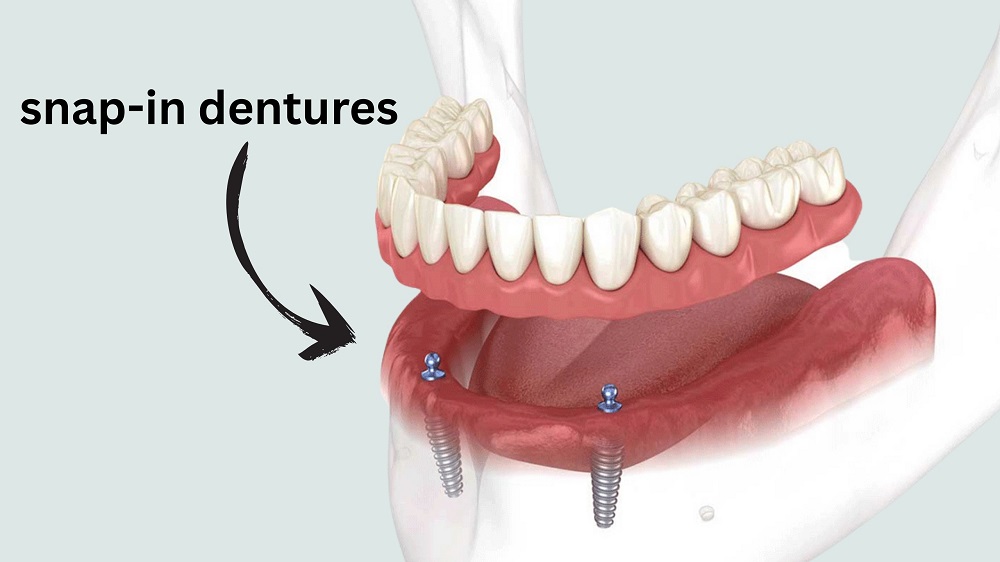
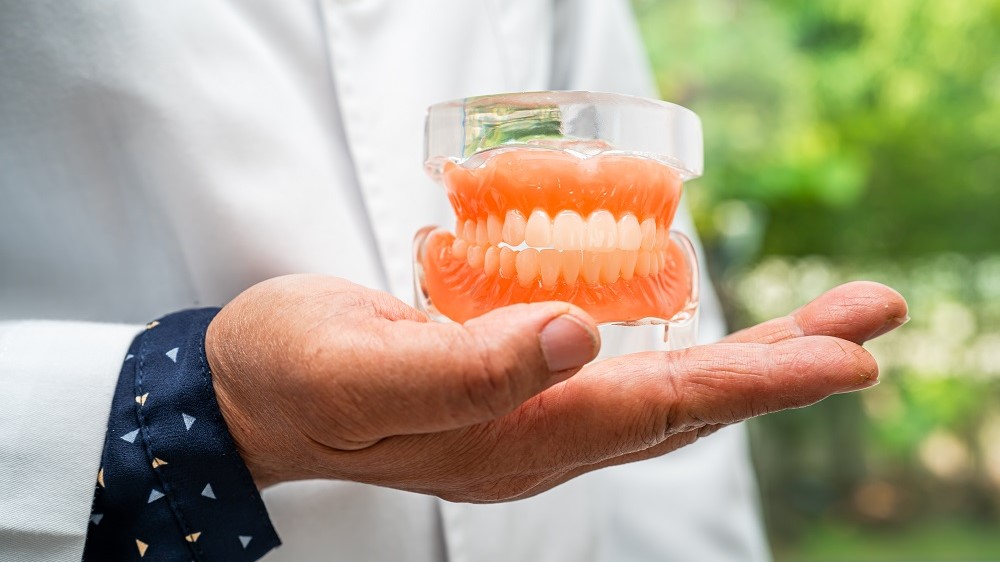
A snap-in denture is made of the same acrylic material as a normal denture, it just snaps onto your implants instead of sitting there through suction alone, kind of like buttons on a jacket. While snap-in dentures provide more stability than a traditional denture, full-mouth dental implants offer an even more secure, permanent solution. Snap-in dentures can be a good alternative for patients who want more stability but may not be ready for a fixed full-mouth restoration like All-on-4.
We only place these on the lower arch. On the upper arch, snap-ins can have a higher failure rate because the repeated snapping in and out can place added stress on the implants. Over time, this repeated motion can pull on the implants and affect their stability.
On the lower arch, you have two options, a two implant version or a four implant version. The four implant option is more stable than the two implant version, but it’s still not going to be as supportive as a fixed, full mouth restoration, and it’s still the same acrylic plastic material. You’ll get roughly 50% of your natural chewing force with a snap-in, compared to 95 to 100% with a fixed, full mouth restoration.
Snap-in dentures can be a reasonable option for a patient who’s already been in a denture and isn’t quite ready to go into something permanent. But we’ll be honest, we rarely place them anymore, we can’t even really think of the last time we did one. By the time you factor in extractions, implants, and the denture itself, the cost ends up fairly similar to a fixed restoration anyway.
“We’ve had several patients that we’ve done snap-ins on in the past, and every single one of them wishes they would have done something fixed. They got a good service out of the snap-ins for a time, but once they really looked at the cost of it and how much they had already invested, it’s kind of a no-brainer to just invest in something that’s fixed into place.” — Dr. Whitmire
Traditional Dentures: Held in by Suction Alone
A traditional denture is held in place almost entirely by suction. An upper denture has to cover the entire roof of your mouth to create that seal, which is a lot of thick, bulky material, and it can genuinely affect how well you taste your food since so many taste buds sit right there on your palate. With full mouth dental implants, we don’t need that support from your palate, so we can open that space back up, giving you more room for your tongue, easier speech, and your sense of taste back.
A lower denture doesn’t have that same suction to rely on. Most patients we see with a lower denture end up needing some kind of adhesive just to keep it in place, since it’s really just resting on your lower jawbone while your tongue and cheeks are constantly moving it around and causing sore spots.
“Most patients report only being able to chew 10 to 20% of the foods they were chewing previously.” — Dr. Everett
We see this every day, and it’s honestly one of the main reasons we try to steer patients toward a better option whenever one is realistic for them. If cost is the biggest issue, we’d at least recommend a two implant snap-in denture so it’s not coming out while you’re talking, or at minimum, giving you something more stable than suction alone.
What Is the Cost of Full Mouth Dental Implants?
We know this is everyone’s question, and before you ever step through our door, we want you to know exactly what you’re getting into. That’s why every procedure we offer is listed on our website with how much it’s going to cost you. As far as the national average goes, we come in lower and more affordable than you’ll find almost anywhere else in the country.
We’re able to do this by bringing the entire process in-house. From your initial consultation and implant placement to the design and fabrication of your new teeth, we handle everything from start to finish under one roof, including having our own in-house dental lab. By keeping the entire process within our practice and eliminating other middlemen, we’re able to keep our costs lower and pass those savings directly on to our patients.
This is obviously a big investment, so we offer financing through multiple third party lenders, and we’ll sit down and walk through the whole process with you to figure out the best financial plan for your situation. We’ll also file your insurance and get as much covered as we can. Around 80% of our patients end up financing this procedure, and the biggest thing we hear at the end of every appointment, once someone’s in their finals, is that they wish they would have started the process sooner.
Making the Right Decision for Your Smile
We’ve walked through full mouth dental implants, snap-in dentures, and traditional dentures, everything full mouth restoration and reconstruction can look like today. What we tell patients at their consultation is that dental implants get you the closest to your natural teeth and their original form. Every case is different, and we’d rather sit down with you directly than have you guess from a blog post. Schedule a complimentary consultation or give us a call and our team will go over your available treatment options and answer any questions you have!
Watch the full video version of this discussion on our YouTube channel, and reach out anytime with questions in the comments. We’re happy to help.